
Alice’s Yard Stick 🔶♠️❤️ Part 3🔎

Welcome to another riveting chapter of the modern surveillance state.
Your Cell Phone’s Wifi Antenna
⚠️Your phone scans for WiFi networks 24/7 📡
Even when you’re not connected.
This is what they build from those scans 🧵👇
Let me explain every single piece of this surveillance system so normies can understand what’s happening to them right now.
THE TARGET DEVICE PROFILE (Top Left) 📱
Device ID: DEV-7A3F9B First Seen: SUN 10:14 AM at CHURCH ⛪
That’s YOU. One scan at church Sunday morning and you’re permanently in their system.
From that SINGLE capture, they mapped:
• 36 WiFi networks you passed by 📶
• 7 locations in your daily life 📍
• Your complete daily routine 🔄
• 16 people you’re regularly near 👥
All PASSIVELY.
You didn’t connect to any WiFi. Your phone just scanned.
THE NETWORK MAP (Center) 🗺️
Each circle is a place in YOUR life identified by WiFi networks your phone detected:
⛪ CHURCH (purple): CalvaryChapel_Guest
🏠 HOME (dark blue): Smith_Family_5G
🏢 OFFICE (green): TechCorp_Internal
💪 GYM (pink): FitLife_Premium
🛒 GROCERY (green): FreshMart_WiFi
☕ COFFEE SHOP (orange): BlueMug_Public
🏫 KIDS’ SCHOOL (pink): OakviewElem_Staff
🏘️ NEIGHBOR (blue): Johnson_Net_2.4G
Your phone sees your neighbor’s WiFi from your house → They know you live next door to that address 🏠
Your phone sees school WiFi → They know you have kids 👨👩👧👦
Your phone sees office WiFi 8am-5pm → They know where you work 💼
THE WIFI PROBE LOG (Bottom Left) 📊
This is the raw data your phone is SCREAMING into the void:
📡 PROBE: FitLife_Premium | -70dBm
📡 PROBE: FreshMart_WiFi | -65dBm
📡 PROBE: BlueMug_Public | -73dBm
Every network. Every router. Every signal strength.
They’re building a TIMELINE of everywhere you go with PRECISION ⏱️
Signal strength tells them how CLOSE you are to each spot.
THE AI INFERENCE ENGINE (Bottom Right) 🤖
Now AI takes that raw data and starts GUESSING about your life:
🏠 HOME: Smith_Family_5G detected every night = Your address identified
💼 WORK: TechCorp_Internal detected 8AM-5PM = Your employer identified
👨👩👧 FAMILY: OakviewElem detected = You have school-age kids
☕ ROUTINE: BlueMug_Public every morning = You’re a coffee regular
🏘️ NEIGHBOR: Johnson_Net_2.4G = They mapped your neighborhood
The AI doesn’t just see locations 📍
It builds PATTERN RECOGNITION 🧠
You hit the gym every Monday/Wednesday at 6pm 💪
You grab coffee every weekday at 7:15am ☕
You’re at church every Sunday 10am-11:30am ⛪
You shop groceries every Thursday evening 🛒
They know your routine better than your own family💀
THE PART EVERYONE MISSES ⚠️
This WiFi fingerprint thing?
IT’S JUST ONE LAYER OF A SEVEN-LAYER SURVEILLANCE CAKE 🎂
📍 Geofence capture (grabbing your device ID at church/events)
📶 WiFi fingerprinting (what you’re seeing here)
🔵 Bluetooth proximity logging (tracking who you’re near)
📡 Cell tower triangulation (backup tracking when no WiFi)
🛰️ GPS coordinate harvesting (from apps demanding location permission)
📲 Device advertising ID (linking to your web browsing)
🕸️ Social graph mapping (connecting all your relationships)
Each layer feeds the others 🔄
The geofence grabbed you at church ⛪
The WiFi mapped your entire life 🗺️
Bluetooth logged everyone you sat near 👥
Cell towers tracked you driving 🚗
GPS confirmed exact coordinates 🎯
Your ad ID linked your web history 💻
The social graph connected your whole network 🕸️
THEY BUILD A COMPLETE FILE ON YOU 📂
Who you are ✅
Where you live ✅
Where you work ✅
What you believe ✅
Who your friends are ✅
What your routines are ✅
What your weaknesses are ✅
All from PASSIVE SCANNING 📡
No warrant ❌
No consent ❌
No notification ❌
THE COMPANIES DOING THIS RIGHT NOW 🏢
This isn’t conspiracy theory. Real companies selling this data TODAY:
@GroundTruthCo Selling church geofence data 📍⛪
@mobilewalla Profiling every device owner 📱👤
@Placer_ai Tracking where you shop 🛒📊
@Cuebiq Harvesting location pings 📡🎯
@SafeGraph Selling POI visit patterns 🗺️💰
They call it “location intelligence for brands and campaigns” 🎯
Translation: They’re selling your life 💰
WHAT YOU CAN DO (BUT IT’S NOT ENOUGH) 🛡️
📱 iPhone: Settings > Privacy & Security > Location Services > System Services > Networking & Wireless > OFF
🤖 Android: Settings > Location > WiFi scanning > OFF
But real talk? You’re STILL vulnerable through Bluetooth and cell towers 📡
The only actual defense is leaving your phone at home 🏠
Which they KNOW you won’t do 😏
WHY THIS MATTERS FOR POLITICAL TARGETING 🎯
🌍 Foreign governments BUY this data from brokers
🗳️ Political campaigns use it for micro-targeting
🎭 Influence operations identify high-value targets
📺 Propaganda gets personalized to YOUR movement patterns
They know you go to church ⛪
They know your routine 🔄
They know your social circle 👥
Now they can hit you with AI-generated content designed SPECIFICALLY for someone with your exact profile 🤖
🔗THE TPUSA/SUPERFEED/AZ GOVERNMENT CONTROL/MAKE HEAVEN (HELL) CROWDED = CONNECTION 🔗
My TPUSA investigation documents Superfeed Technologies selling geofencing to churches and political orgs 📄
This WiFi fingerprinting layer is HOW they build the targeting profiles 🎯
Then they use those profiles for what they call “ministry outreach” ⛪
But it’s SURVEILLANCE wrapped in religious language 🙏 Funded by FOREIGN MONEY💰
BOTTOM LINE ⚡
📱 Your phone is a 24/7 surveillance device
📶 WiFi fingerprint is just ONE targeting layer
🏢 Commercial companies sell your complete life pattern 🌍 Foreign governments buy it
🎯 Political operations weaponize it
And 99% of Americans have NO IDEA it’s happening 💀
Share this if you think people should know they’re being tracked 🔁💥
~Source Danksterintel
Your Tires
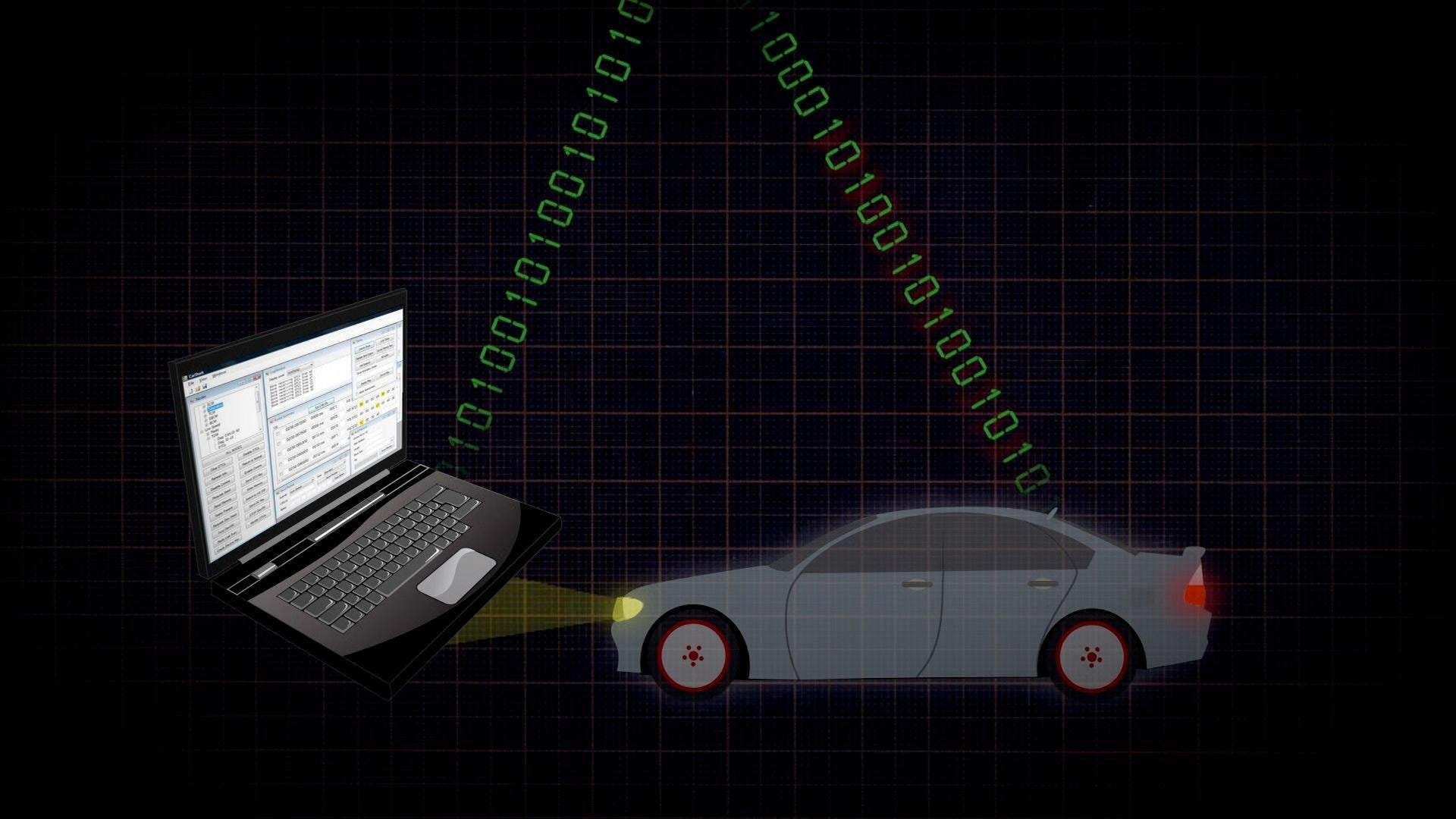
🦔 Researchers found that tire pressure monitoring systems transmit unencrypted data with unique vehicle identifiers that can be picked up from 50 meters away using a $100 device built with a Raspberry Pi. Place receivers along known routes and you can track a specific vehicle’s movements without cameras. Thieves could learn delivery schedules, estimate cargo weight from pressure readings, or even spoof flat-tire warnings to force a vehicle to stop. Toyota, Renault, Hyundai, and Mercedes all use the vulnerable systems, and there’s no standard for fixing it.
My Take
These systems have been broadcasting unencrypted unique identifiers for years. The vulnerability isn’t new, the attention is. And there’s no easy fix because there’s no standard and millions of cars are already on the road with these sensors installed.
For most people, this probably isn’t the biggest privacy risk you face. Your phone is a much more effective tracking device and you carry it everywhere voluntarily. But it’s another example of systems designed for function without any thought about security or privacy. Smart TVs, age verification tools, tire pressure sensors, none of them were built to spy on you, but they all can. If you’re genuinely concerned about being tracked, older vehicles without TPMS are an option, though you’d also need to leave your phone at home. For everyone else, this is mostly a reminder that the infrastructure for surveillance keeps expanding into places most people never think to look.
~ Source Hedgie on X
Your Keyboard

Keystroke Cadence: The Biometric That Identifies You Faster Than a Fingerprint – Real Cases of Criminals and Frauds Caught
Imagine logging into your work laptop or online banking account. You type normally — nothing special. But in the background, invisible software analyzes every pause, every key hold, every tiny rhythm in your typing. Within seconds, it knows: Is this really you? Not your password. Not your fingerprint. Your personal typing cadence.
This is keystroke dynamics (also called keystroke biometrics or typing cadence), a behavioral biometric that has quietly become one of the most powerful tools for identifying people online. Unlike a fingerprint scan — which requires an explicit action, special hardware, and a one-time check — keystroke analysis works passively during everyday typing. It can profile and verify you with just a short password or sentence, then continuously monitor you in the background. Studies and real deployments show it often flags impostors faster and more seamlessly than physical biometrics, with accuracy rates climbing into the high 90s when powered by modern AI.
And yes, it has already caught real people.
How Keystroke Cadence Works — And Why It’s “Faster” Than a Fingerprint
Keystroke dynamics doesn’t care what you type; it cares how you type it. The system measures:
• Dwell time: How long you hold each key down.
• Flight time: The gap between releasing one key and pressing the next.
• Overall cadence: Rhythm, speed variations, error patterns (like backspacing), and even sequences for common words.
These create a unique “typing fingerprint” — as distinctive as your actual fingerprint, but behavioral and impossible to leave behind like a physical print. Machine learning builds a profile from your normal sessions. Deviations trigger alerts.
It’s faster and more practical than fingerprints for several reasons:
• Passive and continuous: No scan required. Data is collected in the background while you type a password, fill a form, or work. Identification happens in real time.
• No hardware needed: Works on any keyboard or touchscreen.
• Remote-friendly: Perfect for online banking, remote work, or exams.
• Harder to spoof long-term: Physical biometrics can be copied (fake fingers exist); typing rhythm is subconscious and changes subtly with stress or fatigue, but impostors struggle to maintain it perfectly.
Research consistently shows high uniqueness — one study achieved 95.5%+ accuracy distinguishing users typing the same text. Commercial systems combine it with mouse movements or device data for even stronger results.
Historical Roots: Identifying Operators by “Fist” in WWII
The concept isn’t new. In the late 1800s, telegraph operators were recognized by their unique “fist” — the personal rhythm of dots and dashes in Morse code. During World War II, military intelligence weaponized this. Allied forces tracked German radio operators by their sending cadence. They could identify specific individuals, detect when an operator was replaced (signaling a unit change or spy), and even map enemy ship movements through traffic analysis. This “keystroke-like” identification helped catch infiltrators and win battles long before computers existed.
Real-World Cases: People Actually Caught by Their Typing Rhythm
1. Amazon Exposes a North Korean Operative (2025)
In one of the most headline-grabbing modern examples, Amazon’s security team caught a North Korean infiltrator posing as a U.S.-based IT contractor. The imposter had passed background checks and was remotely controlling a laptop in the U.S. while operating from North Korea.
The giveaway? An “infinitesimal” but consistent 110-millisecond lag in keystroke input timing — a telltale sign of remote relay over VPN or proxy. Normal local typing has near-zero latency; this delay screamed “someone else’s fingers on the keys from halfway around the world.” Amazon’s behavioral monitoring (analyzing keystroke cadence and response times) flagged it immediately. The scheme was part of a broader North Korean operation to place operatives in Western tech firms for espionage and revenue. The discovery led to further investigations and blocked over 1,800 similar attempts across Fortune 500 companies.
This wasn’t a fingerprint scan at the door — it was passive typing analysis during normal remote work that exposed the fraudster.
2. UK Police Officers Caught Faking Work-from-Home Hours
Greater Manchester Police (GMP) and other UK forces deployed keystroke monitoring software on work devices. Officers were supposed to be working remotely, but some were “key jamming” — repeatedly pressing one key or holding keys down to simulate activity and inflate hours.
The system detected wildly abnormal typing patterns (e.g., one key hammered thousands of times with unnatural rhythm). In GMP alone, over 28 officers were identified this way; four were sacked, and others resigned. Across UK police forces, dozens more faced discipline. It wasn’t about identifying who typed (they were logged in), but the unnatural cadence proved they weren’t genuinely working — catching fraud and misuse of public resources in real time.
3. Banks Stop Account Takeovers and Identity Fraud in Real Time
Major banks now embed keystroke dynamics (often via tools like BioCatch, TypingDNA, or BehavioSec) for continuous authentication.
• A top U.S. bank used behavioral biometrics (including typing rhythm) to detect a sustained account takeover campaign targeting Zelle payments. Cybercriminals tricked customers into sharing credentials, but the impostors’ typing patterns didn’t match the real owners. The system flagged anomalous cadence during enrollment and transfers, stopping the attacks and saving millions.
• Another large bank reported preventing losses of nearly $2 million per month by catching sessions where passwords were correct but keystroke profiles screamed “impostor.”
• Research-backed tools (like a Brigham Young University system) analyze typing when users enter personal info (name, address, SSN). Fraudsters using stolen data lack muscle memory — their cadence differs dramatically. Tests showed 95.5% accuracy flagging fake applications before accounts are opened.
These aren’t hypotheticals: they prevent real fraud daily, identifying impostors faster than any manual review or fingerprint check could.
4. Catching Cheating and Impersonation in Online Exams and Assessments
Universities and certification platforms use keystroke monitoring to combat contract cheating and proxies. Systems build a baseline profile during enrollment, then compare during tests. Sudden changes in rhythm (or matches to known “helper” profiles) flag suspicious activity.
Research and deployed tools have caught rings where one person types for multiple students — the typing cadence links unrelated accounts to the same individual. High-stakes tests like the Duolingo English Test combine it with other signals to identify and block fraud.
The Future (and Privacy Trade-Offs)
Keystroke dynamics is expanding into forensics (linking anonymous cyber threats or typed threats) and even mental health monitoring (subtle rhythm changes can signal stress or depression). Combined with AI, accuracy keeps improving while staying invisible to users.
Of course, there are downsides: Typing patterns can shift with injury, fatigue, or new keyboards, so systems use adaptive thresholds. Privacy advocates worry about constant monitoring, though most implementations are consent-based and focused on security.
Yet in an era of remote everything — work, banking, education — this passive biometric is proving its worth. It doesn’t need you to press your finger on a scanner. It just watches how you naturally type… and knows exactly who you are.
Your next login might already be judging you by your cadence. And for impostors, fraudsters, and infiltrators, that judgment comes faster than they can fake a fingerprint.
Source ~ Social Media
Your Printer
Many color laser printers and copiers embed a hidden tracking code—often in the form of tiny yellow dots invisible to the naked eye—that can identify the specific printer used to produce a document, including its serial number and sometimes the date and time it was printed. This technology, known as printer steganography or machine identification code (MIC), was developed to combat counterfeiting and is implemented by manufacturers like Xerox in response to government requirements.
However, not all printers do this: it’s primarily associated with color laser models, and the Electronic Frontier Foundation (EFF) notes that while they’ve decoded patterns from several brands, it’s safest to assume most modern color laser printers include some form of forensic tracking, even if not always via visible yellow dots. Black-and-white printers, inkjets, and older models generally do not add these codes.
Your mosquito
In the not too distant future, the bugs you see might not actually be a bug.
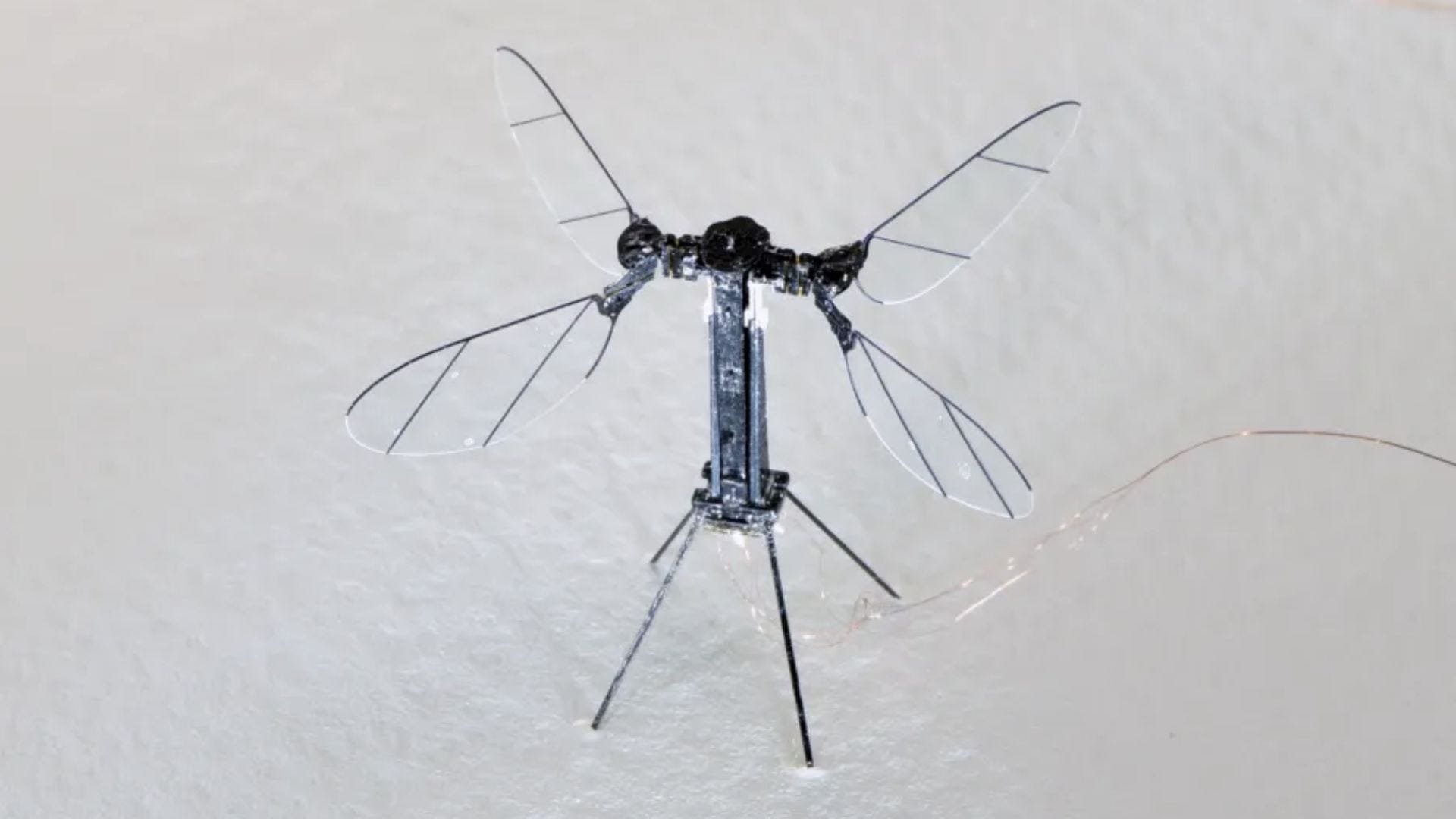
China has developed and publicly unveiled a prototype mosquito-sized microdrone (often called a “mosquito-like” or “bionic microdrone”) as of June 2025. This is not a hoax or old rumor—it’s a real research prototype from a Chinese military-affiliated university, widely reported by credible outlets referencing Chinese state media.
The drone was developed by the National University of Defense Technology (NUDT) robotics lab in Hunan province. It was demonstrated in a CCTV 7 report (aired around mid-June 2025), where a student named Liang Hexiang held one in his hand and described it as suited for “information reconnaissance and special missions on the battlefield.”
Key Specs and Design
• Size and weight: Roughly 1–2 cm long (about the size of a real mosquito or smaller than a fingernail), weighing ~0.2–0.3 grams.
• Appearance and flight: Bionic/mosquito-mimicking design with leaf-shaped wings, a slender black body, and three ultra-thin “legs.” Wings flap up to 500 times per second for silent, erratic flight that blends into the environment.
• Stealth features: Non-metallic materials, tiny radar cross-section (nearly invisible to standard detection), and it can perch on skin or fingertips. It includes tiny cameras, microphones, and sensors for capturing visuals, audio, or signals.
It looks almost exactly like a real insect (Unconfirmed footage)
Purpose and Capabilities
It’s designed primarily for covert military reconnaissance and surveillance—especially in tight indoor spaces or battlefields where larger drones can’t go. It’s controlled via smartphone in lab tests and transmits data back. Similar micro-drone research exists elsewhere (e.g., Harvard’s RoboBee or the palm-sized Black Hornet), but China’s version stands out for its extreme insect mimicry.
Important Limitations (It’s Still a Prototype)
• Extremely short battery life (minutes of flight, mostly indoor/lab demos).
• Very limited range and payload (basic sensors only; data quality is low).
• Highly sensitive to wind—practical outdoor or swarm use is not yet feasible.
• No confirmed widespread deployment or weaponization; it’s an early-stage research project highlighting advances in micro-robotics and materials science.
The electricity you pay for
Most audio recordings contain a background “mains hum” (electrical noise) from electric power grid oscillations that can be matched with grid readings to date the clip to the second it was recorded.
This is called Electrical Network Frequency (ENF) Analysis.
Most of the world runs on an alternating current (AC) grid at either 50 Hz (Europe/Asia) or 60 Hz (Americas).
The Fluctuation: The grid is never perfectly stable. As millions of people turn on kettles or factories shut down, the frequency fluctuates by tiny fractions—think 59.998 Hz vs. 60.002 Hz.
The “Time-Stamp”: These fluctuations are identical across the entire synchronized grid. Power companies keep meticulous logs of these micro-variations.
The Catch: Any audio recorded near an electrical source (a lamp, a wall outlet, or even a battery-powered device near a power line) picks up this “mains hum” via electromagnetic induction providing an exact time stamp of the location where you recorded the audio.
In the next episode….👇
Your phone’s accelerometer logging your gait so precisely it knows which leg you favor
Ultrasonic beacons in retail stores pairing your devices to your physical location.
License plate readers logging 99% of urban driving routes within 24 hours
Behavioral biometrics scoring how you hold your phone to decide if you’re you and these are just the ones with published white papers
This article was brought to you by
